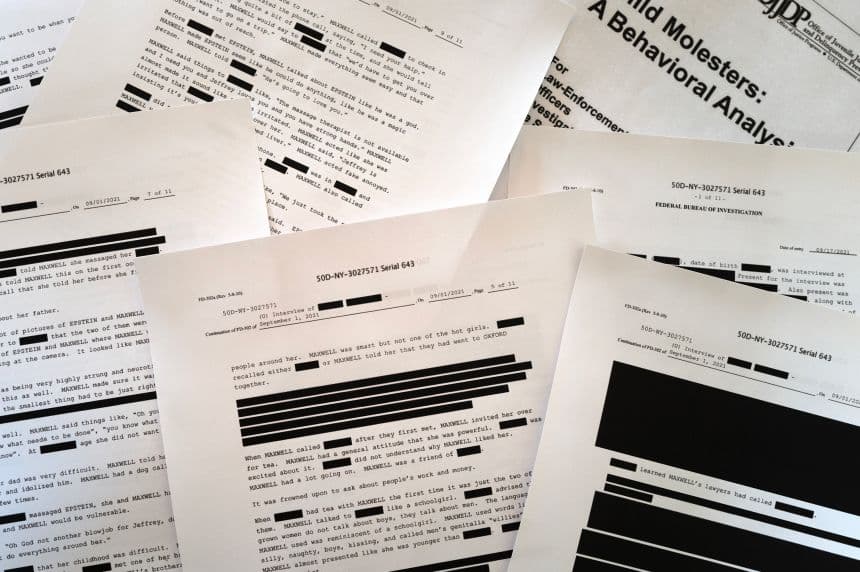
Sealed records in the Epstein case are court materials placed under access restrictions by specific legal mechanisms: grand jury secrecy under Rule 6(e), protective orders covering discovery, victim-privacy redactions, and case-by-case sealing orders. Sealing is a controlled-access procedure, not a stand-alone finding about wrongdoing, and access status can change as courts rule on motions to unseal. These mechanisms explain most of the gap between what is known to exist in the case record and what can currently be read. This guide consolidates how each one works, what a sealed entry can and cannot tell you, and how to follow the litigation trail that determines what becomes public, with worked examples drawn from the archive's court filings and grand jury records. Each section pairs the governing rule with the documents where you can watch that rule being applied.
What a Sealed Record Actually Is
A sealed docket is not a single legal category; it is an access status that can cover an entire case, selected entries, or attached materials only. In public-interest litigation this creates a recurring challenge: readers can see that activity exists without seeing the underlying filings yet. Sealing decisions typically reflect competing duties — open courts, fair process, privacy protections, witness safety, or active investigative needs — and courts generally require specific reasons before sealing judicial records. A high-profile case can therefore be partially visible while key entries remain inaccessible. That mixed state is procedural, not proof that records vanished, and docket metadata alone is never enough to infer the substance of sealed entries. The best interpretive method is to track the later orders that confirm scope changes, because the resulting order is the strongest document for determining what became public and what remained restricted. Sealing also follows recognizable patterns, and identifying which one you are looking at is the first analytical step.
- Narrow sealing: specific exhibits or identifiers are withheld while the motion text itself remains public.
- Broad sealing: core entries and related attachments are unavailable pending court review.
- Temporary sealing: entries stay sealed while the parties brief whether unsealing is appropriate.
- Durable sealing: the court issues a reasoned order maintaining restrictions — and that order, not the sealed page, is usually the most informative document available.
Grand Jury Secrecy and the Rule 6(e) Baseline
Grand jury secrecy in federal trafficking investigations is a rule-bound process outcome. Rule 6(e) restricts disclosure of matters occurring before the grand jury: who testified, what was presented, and how the process unfolded are typically protected. The baseline is confidentiality — designed to protect witnesses, uncharged parties, and investigative integrity — but courts can authorize limited disclosure in defined circumstances. Secrecy applies to process details, not to every surrounding court or agency record, which is why public reporting can move faster than full record visibility. Because public dockets, agency statements, and civil records appear on different timelines than grand jury material, staggered releases create uncertainty windows where commentary can outrun evidence. Treating each new document as a layer rather than a full case snapshot improves accuracy, and publication gaps should be labeled as unresolved questions rather than inferred conclusions. The Florida grand jury litigation in the archive shows the full exception process operating, from petition through briefing to a final ruling:
- S.D. Fla. Petition to Unseal Epstein Grand Jury Transcripts — the petition asking the court to release the transcripts.
- Order Requiring Briefing on Grand Jury Secrecy Exceptions — the court directing the parties to address which secrecy exceptions could apply.
- Government Supplemental Brief on Epstein Grand Jury Release — the government's supplemental position on release.
- Order Denying Petition to Unseal Florida Federal Grand Jury Transcripts — the reasoned ruling that kept the transcripts sealed.
For a deeper dive into the specific exceptions that let courts release grand jury material after a conviction, read the companion explainer.
Read: What Rule 6(e) Allows Courts to UnsealBrowse every petition, briefing order, and ruling in the grand jury secrecy litigation alongside the underlying proceeding records.
Browse: Grand Jury RecordsProtective Orders and Why Discovery Stays Out of View
Protective orders are one of the most important reasons discovery records remain outside immediate public view. In document-heavy litigation, parties may exchange large volumes of material before anything is filed on the docket, and courts use protective orders to control misuse, privacy exposure, and premature disclosure while litigation is still developing. Judges can restrict discovery handling to prevent annoyance, harassment, or undue burden; in practice this includes confidentiality and attorneys-eyes-only designations, limits on sharing produced material outside counsel and experts, requirements to redact personal identifiers before filing, and clawback procedures for privileged or misproduced documents. These constraints are procedural controls, not a final ruling on truth or evidentiary weight. Protective orders are normal case-management tools: they can delay or limit public access, but they do not end the possibility of later disclosure, and limits can be narrowed once material is used in motions or at trial.
Most discovery is exchanged between parties and never automatically becomes part of the public docket. Access expands when a party relies on discovery in a dispositive motion or hearing exhibit, when a court orders unsealing or rejects overbroad confidentiality claims, when a later filing includes redacted or partial versions for public review, or when parallel proceedings produce overlapping records through separate channels. That is why coverage can mention records that readers cannot yet locate in a docket download — and why every claim should be treated as stage-specific. Was the item exchanged, filed, admitted, or merely described? If the source cannot identify that stage, confidence should stay low, because strong reporting always distinguishes exchanged documents from filed evidence. The archive holds several documents that show these controls at work:
- Motion for Protective Order — Giuffre v. Maxwell — the request to restrict how discovery material in the civil case could be shared.
- Kellen Sealed Excerpts: Fifth Amendment Log — deposition material that remained under seal.
- Sealed Giuffre Testimony: Named Individuals — Giuffre testimony that remained under seal.
- Sjoberg Unsealing: Redacted vs. Released — a side-by-side view of what redaction withheld and what was released.
How Judges Weigh Motions to Unseal Victim-Related Records
Motions to unseal victim-related records force courts to balance transparency against privacy, safety, and statutory victim-protection obligations, so the outcome is rarely binary. In Epstein-linked proceedings, judges have often chosen partial access: enough context for public oversight, with targeted redactions to prevent identifiable harm. Courts typically evaluate whether the requested material is necessary to understand a judicial decision, whether narrower alternatives such as pseudonyms or limited release can work, whether disclosure risks exposing victims or non-party individuals, and whether the public-interest argument is specific and document-linked. Unsealing decisions are balancing decisions, not all-or-nothing outcomes, and sealing can be challenged: media organizations, public-interest intervenors, or the parties themselves may move to unseal or narrow restrictions.
When reading redaction-heavy orders, start with the court's written reasoning, then compare it against the released filing and docket notes. This separates what the court confirmed from what remains undisclosed, and it avoids a common error: treating every redaction as hidden substance rather than routine privacy compliance. Redactions can preserve evidentiary meaning while limiting re-identification risk, and the order rationale is often more informative than the redacted page itself; a redacted filing can remain highly informative when the court's reasoning and procedural context are clear. Pair each motion to unseal with the resulting order before summarizing, track amendments because access rules can evolve in stages, label sensitive omissions as legally protected unless a later order changes their scope, and cite order language directly when explaining why details were withheld. The unsealing trail in Giuffre v. Maxwell illustrates each of these stages:
- Motion to Unseal Giuffre v. Maxwell — the motion asking the court to open the civil record.
- 2d Circuit: Document Unsealing (18-2868) — the appellate ruling in the unsealing litigation.
- Judge Preska Unsealing Orders: Timeline — the sequence of orders governing the staged releases.
- Unsealed Documents: Jan 3, 2024 Release — the first wave of the January 2024 unsealing.
- January 8, 2024 Unsealing Order: Names Released — the follow-on order releasing names.
- December 18, 2023 Unsealing Order — Giuffre v. Maxwell — the order that set up the January 2024 releases.
- Key Exhibits from Unsealed Giuffre v. Maxwell — exhibits that became public through the process.
For what Judge Preska's orders actually released in January 2024 — and how the staged unsealing unfolded — see the dedicated report.
Read: The January 2024 UnsealingProcedural Signals: Status Conferences, Appeals, and Collateral Review
A status conference is primarily a case-management event: it usually addresses scheduling, discovery logistics, and motion sequencing rather than final merits decisions. You can reliably infer that the court is actively managing timeline and workload, that parties may be narrowing disputes into defined motions, and that a minute order or scheduling order may formalize next steps. You should not infer that a conference means imminent release of all requested records, that a judge's questions are equivalent to findings of fact, or that a single scheduling change predicts the case outcome. The strongest takeaways from any conference are deadlines, scope changes, and briefing order. After any conference, follow the written trail — minute entries, amended schedules, and deadline orders — and keep language provisional if no written change appears. Status conferences are easy to overstate precisely because they happen in real time, and media summaries may not capture every qualifying statement on the record; docket entries and signed orders are the authoritative procedural record of what actually changed.
Post-judgment procedure adds two distinct tracks that are easy to conflate. Direct appeal is generally record-based review of trial-stage legal error; collateral review is post-conviction and narrower, often focused on constitutional or jurisdictional claims under separate procedural rules with strict timing and gatekeeping standards. Filing activity on one track does not automatically reopen the other, and a post-conviction motion does not by itself mean a conviction is unstable. Common reporting errors include calling a collateral petition a continuation of the direct appeal and using identical wording for outcomes that carry different legal effects. When tracking sealed-record disputes that continue after judgment, tag each update as trial court, direct appeal, or collateral review, and record the issuing court and disposition language exactly. The Maxwell direct-appeal track runs through the archive from opening brief to mandate:
- Defense Appeal Arguments — Maxwell Brief Citing Juror Misconduct (23-7070) — the defense's appellate brief.
- Government's Response Brief — Opposing Maxwell Appeal in Second Circuit — the government's answering brief.
- Second Circuit Opinion — Maxwell Conviction Affirmed on All Grounds — the appellate decision.
- Mandate Issued — Second Circuit Order Finalizing Maxwell Conviction — the order closing the direct-appeal track.
A Working Method for Sealed-Record Research
- Log the source type behind every claim — filing, order, release, or commentary — before writing conclusions.
- Pair major headlines with underlying orders or docket text, and pair each motion to unseal with its resulting order.
- Mark sealed-dependent claims as unverified until a court ruling changes access, and treat unsourced claims about sealed content as unverified by default.
- Record each sealed-entry date and any available docket description, and watch for companion motions to seal or unseal and their disposition.
- Classify every document claim by stage — exchanged, filed, admitted, or described — before assigning it weight.
- Keep hearing coverage provisional until minute entries or amended schedules confirm what changed.
- Update summaries only when official records materially change the picture; a signed order granting full or partial unsealing is the clearest signal that records are newly available.
Track sealing motions, protective orders, unsealing rulings, and appellate decisions across the case in the full archive of court filings.
Browse: Court FilingsEverything above reduces to one discipline: source-tagged, stage-labeled review. Sealed dockets are best interpreted as controlled-access procedures, and reliable analysis comes from the unsealing litigation trail, not from speculation about hidden content. Confusing sealed process with hidden proof distorts public understanding, while clear labeling of confirmed facts, unresolved questions, and legal constraints protects both accountability and victim dignity — overstated interpretations can retraumatize individuals without improving factual clarity, and procedural precision produces fewer corrections when records later become available. Appearing in sealed or unsealed court records is not evidence of wrongdoing, and all individuals named in these documents are presumed innocent unless convicted in a court of law.
Continue Reading
Explore Archive Hubs
Sources & References
- Cornell LII - Federal Rule of Criminal Procedure 6
- DOJ Justice Manual - Grand Jury
- Cornell LII - 18 U.S.C. Section 3771 (Crime Victims' Rights)
- Cornell LII - Federal Rule of Criminal Procedure 49.1
- Justia - Nixon v. Warner Communications, Inc.
- Justia - Press-Enterprise Co. v. Superior Court (II)
- U.S. Courts - Court Records
- Cornell LII - Federal Rule of Civil Procedure 26
- Cornell LII - 28 U.S.C. Section 2255
Frequently Asked Questions
Does a sealed record in the Epstein case mean evidence is being hidden?
No. Sealing is a controlled-access procedure that can reflect privacy protection, witness safety, grand jury secrecy, or active investigative needs. Other records — orders, filings, and agency releases — can still be public, and later orders can narrow or lift restrictions.
Can sealed Epstein records become public later?
Yes. Sealing can be temporary, partial, or revisited after briefing. Media organizations and public-interest intervenors can move to unseal, and a signed order granting full or partial unsealing is the clearest signal that records are newly available.
Why are victim identifiers redacted even in unsealed filings?
Courts balance public oversight against duties to protect privacy and safety. Redactions can preserve the evidentiary meaning of a filing while limiting re-identification risk, and a redacted filing can remain highly informative when the court's rationale is clear.
Does a protective order mean the underlying evidence is invalid?
No. A protective order controls how discovery material is shared and handled during litigation, not whether evidence can later be used in court. Protected material can become public when filed with motions, used in hearings, or unsealed by later order.
What should I check after a status conference in an Epstein-related case?
Check docketed minute entries, scheduling orders, and revised deadlines. Live coverage can be incomplete or interpretive; docket entries and signed orders are the authoritative procedural record of what actually changed.
Can new evidence be introduced on direct appeal?
Generally no. Direct appeal is based on the existing trial record. New factual development is more commonly addressed through separate post-conviction mechanisms such as collateral review, which operates under separate procedural rules with strict timing and gatekeeping standards.
Disclaimer: All information in this article is sourced from publicly available court records, government FOIA releases, and credible news reporting. This is informational content. Inclusion or mention of any individual does not imply wrongdoing. All persons are presumed innocent unless proven guilty in a court of law.