The New Mexico Epstein investigation reached a turning point on August 5, 2026, when the state's legislative Truth Commission released a 119-page interim report confirming that at least five women and girls were sexually abused at Jeffrey Epstein's Zorro Ranch — and identifying roughly 30 more potential victims. The same day, New Mexico Attorney General Raul Torrez sued the U.S. Department of Justice and Acting Attorney General Todd Blanche in the U.S. District Court for the District of Columbia, accusing them of stonewalling the state's reopened criminal probe by withholding unredacted Zorro Ranch investigative files.
Together, the two actions represent the most aggressive state-level challenge yet to federal control of the Epstein records. The interim report concludes that Epstein likely received preferential treatment from New Mexico law enforcement during the 26 years he owned the ranch in Santa Fe County, and it documents that only about half of the 20 institutions subpoenaed since April have fully complied — with the FAA, JPMorgan Chase, and the U.S. Attorney's Office for the Southern District of New York among the holdouts. The commission's final report is due December 31, 2026.
A Commission Born From a Stalled State Investigation
The Truth Commission — formally the House Special Investigatory Committee — was created by a unanimous vote of the New Mexico House of Representatives in February 2026. House Speaker Javier Martinez appointed its four members: Chair Andrea Romero, a Santa Fe Democrat; Marianna Anaya, an Albuquerque Democrat; Andrea Reeb, a Republican and former district attorney; and Bill Hall, a Republican and retired FBI agent. Armed with subpoena power and a budget of roughly $2 million, the panel is charged with documenting what Epstein did in New Mexico, why it went unaddressed for decades, and what changes to state law are needed. Its work runs parallel to a reopened criminal case: the state's original trafficking investigation was halted in 2019, when then-Attorney General Hector Balderas agreed to stand down at the request of federal prosecutors who, the state says, promised to share their findings and never did. Torrez reopened the criminal investigation in February 2026, and investigators searched Zorro Ranch in March 2026 — nearly seven years after Epstein's August 2019 death. The results of that search have not been made public.
The Zorro Ranch property sat at the center of Epstein's New Mexico operations for more than two decades. Read our full breakdown of the property and the 2026 investigation into it.
Inside the Zorro Ranch investigationFive Confirmed Victims at Zorro Ranch — and Possibly 30 More
The interim report is the first government document to assemble a comprehensive account of Epstein's New Mexico footprint. It details the accounts of at least five women and girls abused at Zorro Ranch between 1996 and 2012, and — drawing on survivor accounts and the released Epstein files — estimates that at least 30 people may have been abused by Epstein or his associates in the state. One survivor, massage therapist Rachel Benavidez, who was brought to the ranch in 1999, told the commission there is 'a mountain of evidence this government has been sitting on for decades.' The report also maps the scale of the operation: the ranch employed about 50 people with an annual payroll of roughly $7 million, and flight records show 227 flights to or from Albuquerque and Santa Fe on Epstein-owned aircraft between December 1992 and May 2019, with passengers including former Governor Bill Richardson, former President Bill Clinton, and filmmaker Woody Allen.
What we've seen is there may have been preferential treatment to Epstein as he came and went to New Mexico. — Rep. Andrea Romero, Truth Commission chair
The preferential-treatment finding rests on specific failures. Epstein, a convicted sex offender after his 2008 Florida plea, never had to register in New Mexico because of a loophole in state law. The commission also found no evidence that any law enforcement agency ever searched Zorro Ranch for firearms — weapons Epstein was barred from possessing as a felon — even though such a search could have surfaced trafficking evidence years earlier. More broadly, the report concludes that local law enforcement played a 'passive role,' deferring to federal prosecutors in Miami and New York while, in the report's words, 'the conduct of Epstein and his co-conspirators in New Mexico went unexamined and unpunished.'
Twenty Subpoenas, Seven Holdouts
- 20 subpoenas issued since April 2026 to state agencies, federal offices, banks, and businesses tied to Epstein's New Mexico operations
- About half of the recipients have fully complied, producing more than 100,000 records for investigators
- Deutsche Bank agreed to comply in full and is expected to deliver roughly 60,000 pages of Epstein's financial records
- Seven entities have refused or failed to respond, including the Federal Aviation Administration, JPMorgan Chase, and the U.S. attorney's offices for the Southern Districts of New York and Florida
- The FAA specifically declined to release flight logs containing passenger names
- Four new subpoenas were announced August 5, including one to Ten Thousand Waves, a Santa Fe spa referenced in the released Epstein files
Deeds, appraisals, and corporate filings tied to Epstein's properties — including Zorro Ranch — are available in our archive of public property records.
Browse Epstein property recordsThe Lawsuit Against Todd Blanche's Justice Department
The same day the commission presented its report, Torrez filed a 40-page complaint in the U.S. District Court for the District of Columbia naming the Department of Justice and Acting Attorney General Todd Blanche as defendants. The state says it made at least 10 separate requests for investigative materials over more than three months, all denied or ignored, and the suit accuses the DOJ of 'refusing to facilitate the investigation of state law crimes by hiding information about Epstein and his co-conspirators.' It asks the court to compel production of unredacted files that could help identify victims, witnesses, and additional criminal conduct tied to Zorro Ranch, plus attorney fees. 'Federal inaction does not merely stall the investigation; it prolongs and compounds the suffering of survivors,' Torrez said, adding that Blanche — who is simultaneously seeking Senate confirmation as attorney general — could grant access 'with a stroke of a pen' but has instead, in Torrez's words, 'decided to stonewall, to obstruct and to frankly conceal.'
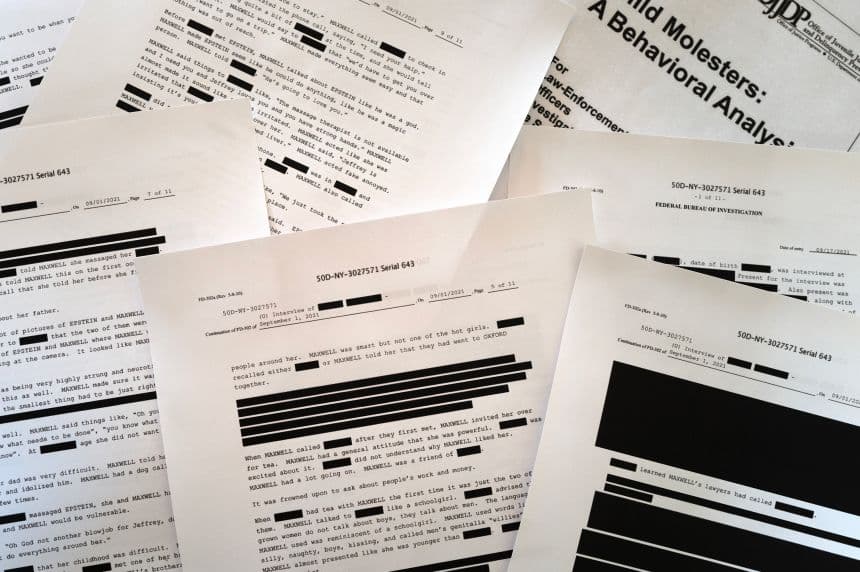
The DOJ rejected the claim that it broke any law, saying the Epstein Files Transparency Act 'does not require, and the protective orders in place in the Southern District of New York do not permit, disclosure of victim-identifying information carte blanche,' and that New Mexico has offered no lawful basis for such sweeping disclosures. But the stakes of unredacted access are laid out in the state's own filings: the files released publicly under the Transparency Act contain more than 13,000 references to Zorro Ranch, yet remain so heavily censored that the commission describes DOJ redactions as a central obstacle to confirming the roughly 30 additional potential victims. Torrez has argued the federal government could simply seek modification of the protective orders, telling reporters that pretending otherwise 'doesn't have any real credibility.'
This is the same Justice Department that announced in April 2026 it would release no further Epstein files. Revisit Todd Blanche's role in that decision.
Blanche and the halted file releasesWhat Happens Before December 31
The commission's final report is due by December 31, 2026, though members have said the work could extend into 2027, when legislative recommendations are expected. In the meantime, the panel will pursue its four newest subpoenas, continue victim outreach, and try to resolve an unsettled information-sharing arrangement with the state Department of Justice covering victim interviews and depositions. The federal lawsuit now moves through the D.C. district court, where a ruling for New Mexico could set a precedent for other states seeking access to withheld Epstein records. As with every entry in this archive, individuals named in flight logs, subpoenas, or investigative records discussed here have not been charged with wrongdoing in connection with this investigation, and all persons who have not been convicted of a crime are presumed innocent.
Follow every development in the Epstein case this year — from the reopened New Mexico probe to the congressional file fights — on our 2026 timeline.
See the full 2026 timelineContinue Reading
Explore Archive Hubs
Sources & References
- Albuquerque Journal — New Mexico attorney general sues US Department of Justice over unredacted Epstein files access
- Albuquerque Journal — Truth commission report: Epstein likely got favorable treatment from NM law enforcement
- Salon — New Mexico sues DOJ over Epstein files and releases truth commission report
- CNN via Yahoo News — Investigations into Epstein's mysterious New Mexico ranch add pressure on the Justice Department
- KOB 4 — New Mexico's Epstein commission releases initial report
- Christian Science Monitor — Blanche, DOJ become a focus of New Mexico Epstein investigations
- Beltway.news — 7 takeaways from new report on Epstein's Zorro Ranch
- New Mexico Political Report — Epstein Truth Commission to present interim report Wednesday
Frequently Asked Questions
What is the New Mexico Epstein Truth Commission?
Formally the House Special Investigatory Committee, it is a four-member legislative panel created by a unanimous vote of the New Mexico House of Representatives in February 2026. Chaired by Rep. Andrea Romero of Santa Fe, it has subpoena power and a budget of roughly $2 million to document Jeffrey Epstein's activities at Zorro Ranch and recommend changes to state law. Its final report is due December 31, 2026.
How many victims does the interim report identify at Zorro Ranch?
The August 2026 interim report details the accounts of at least five women and girls abused at Zorro Ranch between 1996 and 2012. Based on survivor accounts and the released Epstein files, the commission estimates at least 30 people in total may have been abused by Epstein or his associates in New Mexico. Members say heavy DOJ redactions are a key obstacle to confirming additional victims.
Why is New Mexico suing the DOJ and Todd Blanche?
Attorney General Raul Torrez filed a 40-page lawsuit on August 5, 2026, in the U. S. District Court for the District of Columbia after the state says at least 10 requests for investigative materials were denied or ignored over more than three months. The suit asks a judge to compel the DOJ to produce unredacted Epstein files that could identify victims, witnesses, and additional crimes tied to Zorro Ranch.
Which agencies have refused the Truth Commission's subpoenas?
Of the 20 subpoenas issued since April 2026, seven recipients refused or failed to respond, including the FAA, JPMorgan Chase, and the U. S. attorney's offices for the Southern Districts of New York and Florida. The FAA specifically declined to release flight logs with passenger names.
What did the report find about New Mexico law enforcement?
The commission found Epstein likely received preferential treatment during the 26 years he owned Zorro Ranch. He never had to register as a sex offender in New Mexico because of a loophole in state law, and there is no evidence any agency ever searched the ranch for firearms he was barred from owning as a felon. The report says local law enforcement played a passive role and deferred to federal prosecutors, leaving his New Mexico conduct unexamined.
Disclaimer: All information in this article is sourced from publicly available court records, government FOIA releases, and credible news reporting. This is informational content. Inclusion or mention of any individual does not imply wrongdoing. All persons are presumed innocent unless proven guilty in a court of law.