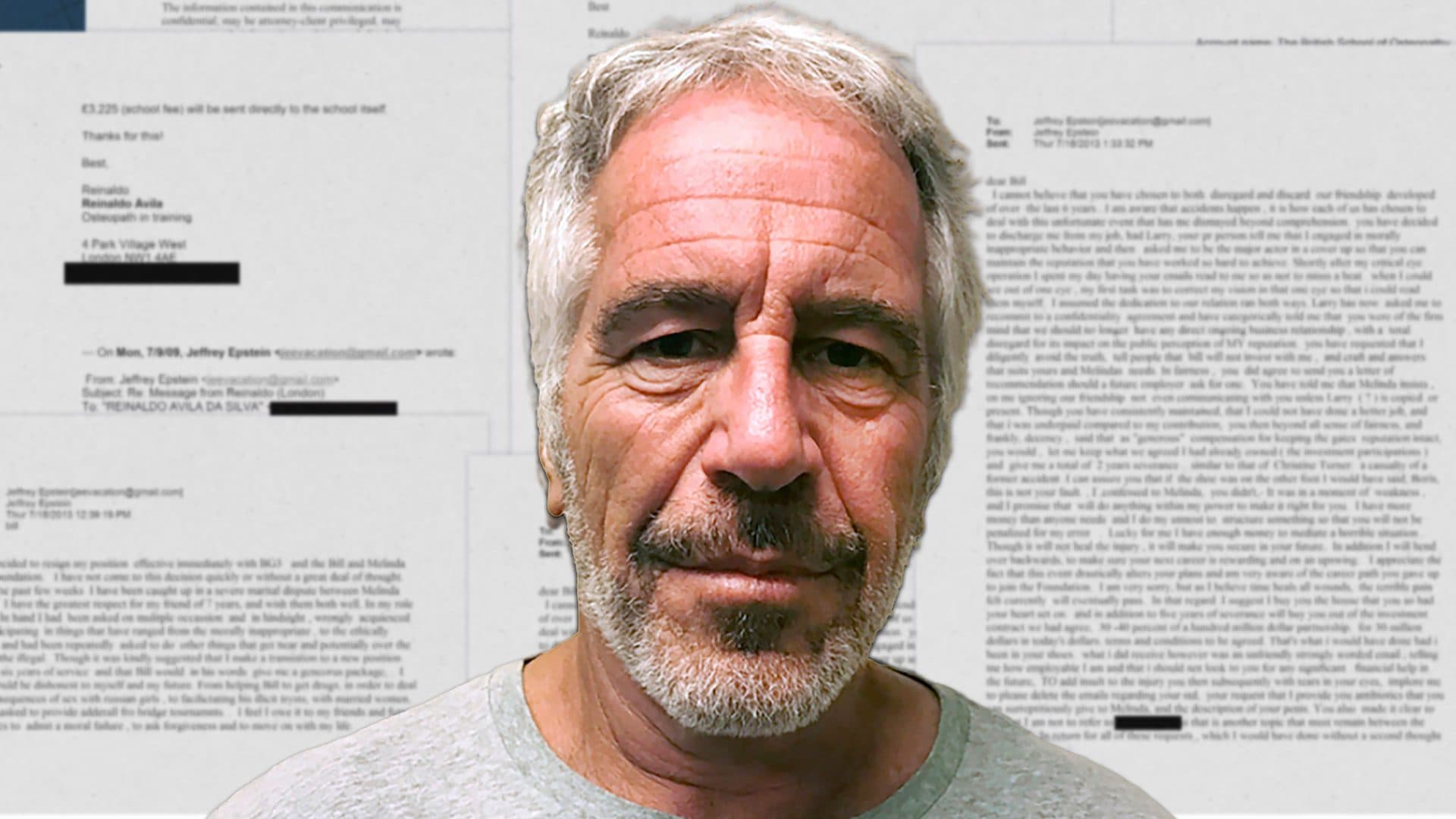
The Senate Finance Committee report released August 4, 2026 by Ranking Member Ron Wyden concludes that Deutsche Bank, JPMorgan Chase and Bank of America enabled Jeffrey Epstein's sex trafficking and money laundering operation by failing to report his suspicious transactions on time — including more than $250 million in Deutsche Bank transactions that were not promptly disclosed to U.S. authorities. The 67-page report, which caps a four-year investigation built on Suspicious Activity Reports, litigation records and information requests to the banks and the Treasury Department, found the three banks facilitated more than $1.4 billion in suspicious wire transfers connected to Epstein over roughly two decades — and that all three waited until after his 2019 sex-trafficking arrest to retroactively flag thousands of questionable transactions. JPMorgan disputes the report's conclusions, saying it flagged suspicious activity to the government as early as 2002.
Bank records detail a shocking pattern of the biggest Wall Street banks choosing to ignore clear evidence of sex trafficking and money laundering, just to keep a wealthy client on the books.
Deutsche Bank: More Than $250 Million Reported Years Too Late
Deutsche Bank served as Epstein's primary bank from 2013 to 2019, taking him on as a major client after JPMorgan exited the relationship. According to the report, the German lender failed to promptly report to U.S. authorities more than $250 million in suspicious transactions tied to Epstein — including funds used to pay women in Russia and other Eastern European countries. Wyden's report alleges this pattern of delayed reporting was likely a violation of federal anti-money-laundering laws. In response to the report, Deutsche Bank expressed regret over its historical relationship with Epstein and said it has cooperated with investigations.
Deutsche Bank's Epstein problem did not start with this report — regulators documented years of compliance breakdowns around his accounts.
How Deutsche Bank's Epstein account compliance failures unfoldedJPMorgan, Bank of America and the Leon Black Payments
JPMorgan Chase was Epstein's primary bank from 1998 to 2013, and the report alleges its executives protected him in part to preserve access to billionaire clients such as Leon Black. Wyden has said Epstein made 4,725 wire transfers adding up to more than $1 billion in and out of his JPMorgan accounts in the decade after 2003, and the report tallies roughly $8.1 million in fees the bank earned from Epstein between 2009 and 2014. Bank of America, meanwhile, held accounts Black used to pay Epstein: approximately $170 million in Epstein-related transactions moved through the bank between 2012 and 2017 for purported tax and estate planning services, and the bank reported them five to seven years after they took place — despite identifying some transactions as having no apparent economic, business or lawful purpose. Apollo's own board review previously found Black paid Epstein $158 million over five years.
The Wyden report is the latest chapter in a much longer financial story that also runs through Bank of New York Mellon.
Every bank that handled Epstein's money, in one guideWhat a Late SAR Means Under Anti-Money-Laundering Law
Suspicious Activity Reports are the backbone of the Bank Secrecy Act: banks are generally required to file them within a 30-day window after detecting potentially illicit transactions, so law enforcement can act in real time. The Wyden report says the banks did the opposite — more than 5,000 suspicious wire transfers went unreported until 2019, when the banks scrambled to file retroactive SARs covering thousands of transactions only after Epstein's arrest on sex trafficking charges. A SAR filed years late is not a paperwork slip; it deprives investigators of leads while a crime is ongoing, which is why Wyden argues the delays likely violated federal anti-money-laundering laws. The report notes that banks and individuals have already paid more than $900 million to settle Epstein-related claims.
- $250 million+: suspicious Epstein-tied transactions Deutsche Bank failed to promptly report, including payments to women in Russia and Eastern Europe
- $1.4 billion+: suspicious wire transfers facilitated by the three banks over roughly two decades
- 4,725: wire transfers totaling more than $1 billion through Epstein's JPMorgan accounts in the decade after 2003
- $170 million: Epstein-related Bank of America transactions connected to Leon Black, reported five to seven years late
- 13: bankers named in the report; only one, Jes Staley, faced professional consequences
- $900 million+: already paid by banks and individuals to settle Epstein-related claims
Five Months After the Senate Blocked Wyden's Records Bill
The report lands five months after a Senate Republican blocked Wyden's Produce Epstein Treasury Records Act on March 3, 2026 — a bill that would have compelled the Treasury Department to hand congressional investigators the Epstein bank records it holds, including SARs and detailed transaction records from JPMorgan, Bank of New York Mellon and Deutsche Bank. Treasury Secretary Scott Bessent repeatedly refused Wyden's requests for the files, saying there were 'no files, per se, just hundreds and thousands of reports.' Finance Committee investigators were permitted only an in-person review of the Treasury files in February 2024, and Wyden has said the portion his staff saw suggests there could be more than $1.5 billion in suspicious Epstein transactions. The new report is, in effect, the committee's public reconstruction of what it could piece together without the subpoena power that bill would have provided.
The fight over Treasury's Epstein files is its own story — including who blocked the bill and what records remain sealed.
Inside the blocked Epstein Treasury Records ActBank Rebuttals, Wyden's Recommendations and the Road Ahead
The banks pushed back on the report's conclusions to varying degrees. JPMorgan disputed the findings outright, saying 'we began flagging suspicious transactions for the government as early as 2002 and throughout our relationship' with Epstein, and noting that 'at no point did any law enforcement agency contact the bank.' Bank of America said it 'did not facilitate wrongdoing.' Deutsche Bank acknowledged regret over the historical connection and pointed to its cooperation with investigators.
Wyden is now urging regulators to investigate the reporting failures — he has called the report 'a ready-made roadmap for prosecutors, investigators and members of Congress' — and plans legislation that would require personal bankers to confirm due-diligence reviews of large wire transfers for ultra-wealthy clients, increase civil and criminal penalties for patterns of negligent non-reporting, and force banks to notify Treasury when they drop a client over trafficking or money-laundering concerns — with community banks exempted. The report also names 13 individual bankers and urges accountability measures such as bonus clawbacks and senior-manager attestations, noting that only Jes Staley, forced out as Barclays CEO, has faced professional consequences to date. As with all records covered in this archive, the individuals named in the report are presumed innocent unless and until proven guilty in a court of law, and inclusion in a congressional report is not proof of criminal wrongdoing.
The financial paper trail behind these findings — court exhibits, settlement records and banking documents — is in our archive.
Browse Epstein financial records and court exhibitsContinue Reading
Explore Archive Hubs
Sources & References
- Wyden Releases New Report on Failure of Wall Street Banks to Blow the Whistle on Jeffrey Epstein's Sex Trafficking and Money Laundering Schemes — U.S. Senate Committee on Finance (Aug. 4, 2026)
- Senate report: Three big banks ignored red flags on Epstein — American Banker
- Deutsche Bank, JPMorgan, BofA Enabled Epstein, Wyden Report Says — Bloomberg Law (Aug. 4, 2026)
- Sen. Wyden Report: Banks Systematically Ignored Jeffrey Epstein's Crimes — The American Prospect (Aug. 5, 2026)
- Senate Republican Blocks Wyden Bill Mandating Treasury Hand Over Epstein Bank Records — U.S. Senate Committee on Finance (Mar. 3, 2026)
Frequently Asked Questions
What did the Wyden report find about Deutsche Bank and Epstein?
The report found Deutsche Bank failed to promptly report to U. S. authorities more than $250 million in suspicious transactions tied to Epstein, including funds used to pay women in Russia and other Eastern European countries. Deutsche Bank was Epstein's primary bank from 2013 to 2019 after JPMorgan dropped him.
How much money moved through Epstein's bank accounts overall?
The report says the three banks facilitated more than $1. 4 billion in suspicious wire transfers connected to Epstein over roughly two decades. Wyden has separately said Epstein made 4,725 wire transfers totaling more than $1 billion through his JPMorgan accounts in the decade after 2003, and that the Treasury records his investigators reviewed could reflect more than $1. 5 billion in suspicious transactions.
What is a Suspicious Activity Report and why does the timing matter?
A Suspicious Activity Report, or SAR, is a filing banks must generally submit to Treasury within about 30 days of detecting potentially illicit transactions, giving law enforcement real-time leads. The Wyden report says the banks instead filed thousands of SARs retroactively — after Epstein's 2019 arrest — leaving more than 5,000 suspicious wire transfers unreported while his operation was active. Wyden argues that pattern likely violated federal anti-money-laundering laws.
How did JPMorgan respond to the Senate report?
JPMorgan disputed the report's conclusions. The bank said it began flagging suspicious transactions for the government as early as 2002 and did so throughout its relationship with Epstein, which ran from 1998 to 2013. It also noted that at no point did any law enforcement agency contact the bank about those filings.
What happens next after the Wyden bank report?
Wyden is urging regulators to investigate the reporting failures — calling his report 'a ready-made roadmap for prosecutors, investigators and members of Congress' — and plans legislation requiring personal bankers to confirm due diligence on large wire transfers for ultra-wealthy clients, stiffer penalties for negligent non-reporting, and mandatory Treasury notification when banks exit clients over trafficking or money-laundering concerns. His earlier bill to force Treasury to hand over the underlying Epstein bank records was blocked by a Senate Republican in March 2026.
Disclaimer: All information in this article is sourced from publicly available court records, government FOIA releases, and credible news reporting. This is informational content. Inclusion or mention of any individual does not imply wrongdoing. All persons are presumed innocent unless proven guilty in a court of law.