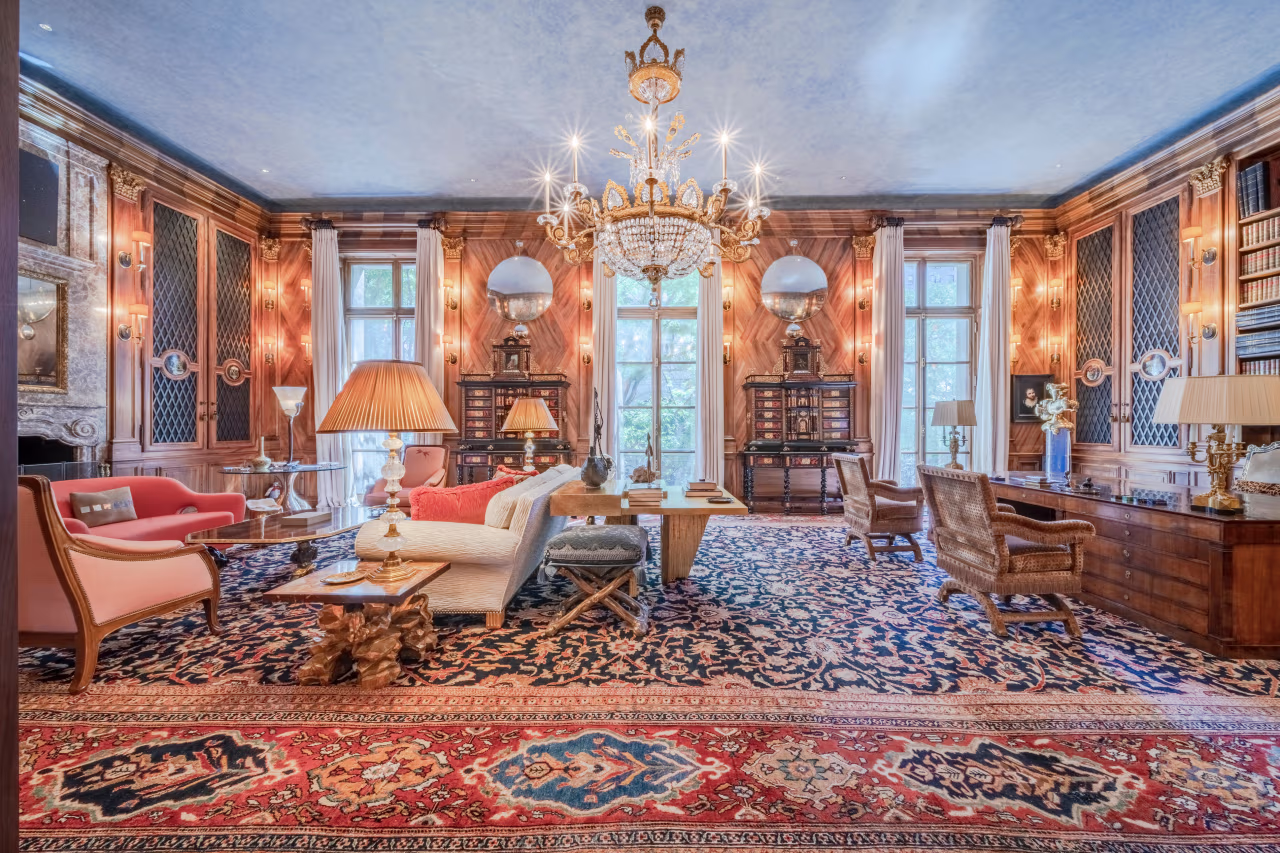
At 28,000 square feet, the townhouse at 9 East 71st Street on Manhattan's Upper East Side was the largest private residence in New York City. Acquired by Jeffrey Epstein in 1998 through a murky transfer from billionaire Les Wexner — reportedly for zero dollars — the seven-story mansion served as both Epstein's primary residence and, according to prosecutors and victims, the operational headquarters of his sex trafficking enterprise. When FBI agents raided the property in July 2019, what they found inside shocked even seasoned investigators.
The Wexner Transfer and Property History
The townhouse's ownership history is itself a mystery. Les Wexner, the founder of The Limited and Victoria's Secret, purchased the property in 1989 and spent millions renovating it. In 1998, Wexner transferred the mansion to Epstein through a trust structure that public records suggest involved no payment. The nature of this transfer — worth an estimated $50-77 million — has never been fully explained. Wexner later claimed that Epstein had 'misappropriated vast sums of money' from him, but the specifics of their financial relationship remain unclear despite the 2026 document releases.
What the FBI Found Inside
When agents executed a search warrant on July 6, 2019, they discovered a property that was as disturbing as it was opulent. The mansion featured a grand staircase, a private gym, multiple floors of living quarters, and an elaborate security system. Agents found a locked safe containing compact discs labeled with handwritten names and the phrases 'Young [Name] + [Name],' along with loose diamonds, a fake passport with Epstein's photograph but a different name, and large quantities of cash in multiple currencies.
The interior decor was notable for its unsettling artwork. Visitors described a life-sized female mannequin hanging from a chandelier, a mural of a prison scene with Epstein depicted in it, and a hallway lined with framed eyeballs. A painting of Bill Clinton in a blue dress hung in one room. The overall impression, according to those who entered the property, was of a space designed to project power, create discomfort, and remind visitors that the owner operated by his own rules.
The townhouse was not just where Epstein lived — it was a set piece designed to intimidate, impress, and compromise. Every room served a purpose in his operation.
The Hidden Surveillance System
Multiple victims and witnesses have testified that Epstein's townhouse was equipped with an extensive hidden camera system. Cameras were allegedly concealed in clocks, smoke detectors, and other fixtures throughout the residence, including in bedrooms and bathrooms. The surveillance system, according to former employees, recorded the activities of guests and visitors — footage that may have been used as leverage over powerful individuals who visited the property. Despite the FBI raid, prosecutors have never publicly accounted for all of the surveillance recordings or explained what happened to the footage.
The Property After Epstein
After Epstein's death in August 2019, the townhouse was listed for sale by the estate. It sold in March 2021 for approximately $51 million to an undisclosed buyer, a significant discount from its estimated value. The sale proceeds were directed to the Epstein Victims' Compensation Fund. The property's history as the alleged epicenter of Epstein's criminal operation made it one of the most notorious addresses in New York City, and its future use remains a subject of public curiosity. The 2026 document releases included additional photographs and floor plans from the FBI raid that provided the public with the most detailed look yet at the interior of the mansion.
View property records and FBI evidence from Epstein's residences
View Property RecordsBrowse the released photographs from Epstein's properties
Read: Epstein Island Photos ReleasedContinue Reading
Explore Archive Hubs
Sources & References
Frequently Asked Questions
What did the FBI find inside Epstein's Manhattan townhouse?
FBI agents who raided 9 East 71st Street in July 2019 found a locked safe containing CDs labeled with names, loose diamonds, a fake passport with Epstein's photo, and large quantities of cash, along with hidden cameras and disturbing artwork.
How did Epstein get his Manhattan townhouse?
Leslie Wexner purchased the property in 1989 and transferred it to Epstein in 1998 through a trust structure for what appears to have been zero dollars. The townhouse was valued at $50-77 million.
What happened to Epstein's New York townhouse after his death?
The 28,000-square-foot mansion sold in March 2021 for approximately $51 million to an undisclosed buyer, with proceeds directed to the Epstein Victims' Compensation Fund.
Disclaimer: All information in this article is sourced from publicly available court records, government FOIA releases, and credible news reporting. This is informational content. Inclusion or mention of any individual does not imply wrongdoing. All persons are presumed innocent unless proven guilty in a court of law.