Searches for "doj inspector general epstein files audit" surged after the Office of the Inspector General announced on April 23, 2026 that it is auditing how the Department of Justice identified, redacted, and released records under the Epstein Files Transparency Act.
In short: The DOJ watchdog's review is procedural, not a criminal verdict. It focuses on three concrete questions already listed by OIG: how DOJ identified and produced records, how it applied redaction and withholding rules, and how it handled post-release publication concerns after survivor-privacy complaints.
What the OIG said on April 23, 2026
The DOJ OIG posting sets a narrow preliminary objective: evaluate process compliance with the statute. The page states the office may expand scope if needed and says it will publish a public report when the work is complete, consistent with the Inspector General Act.
- Review of DOJ identification, collection, and production of responsive Epstein-file material.
- Review of DOJ guidance and workflows for redacting or withholding records under statutory exceptions.
- Review of DOJ response to post-release publication concerns, including privacy-protection issues.
Why this audit is in the news now
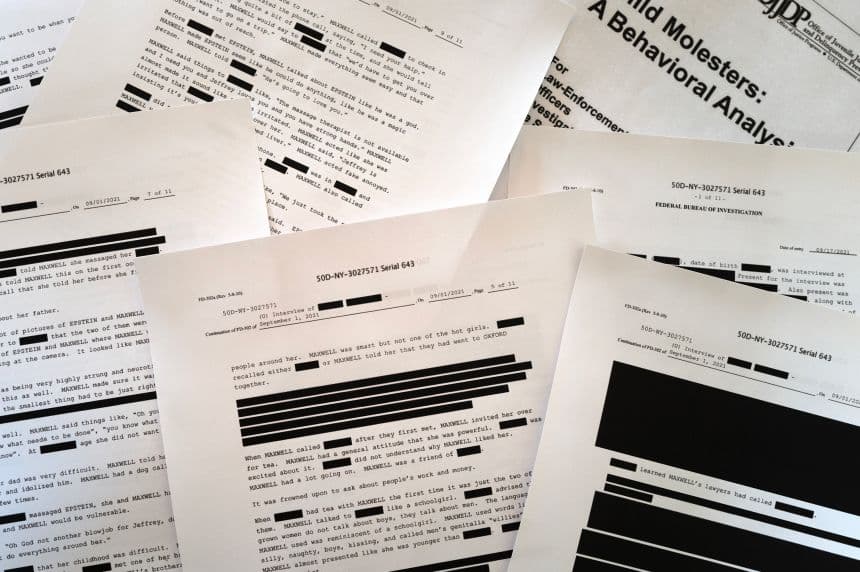
Major outlets, including AP, Reuters, and The Washington Post, tied the audit to months of bipartisan criticism about staggered releases, removed or restored files, and whether victim information was adequately protected during publication.
A key timeline point is DOJ's January 30, 2026 letter to Congress claiming compliance with production obligations under the Act. Later public disputes over withheld and re-released material made that compliance claim a central oversight target.
How congressional pressure intersects with the audit
Congressional activity did not end with document publication. The House Oversight Committee issued a March 17, 2026 subpoena for then-Attorney General Pam Bondi's deposition, and AP later reported DOJ signaled she would not appear for the April 14 deposition after her ouster.
Separately, a March 11 Senate letter requested a GAO review of DOJ redaction operations. That means OIG and congressional oversight are moving in parallel, with different mandates and legal authorities.
Procedural transparency is not the same thing as total disclosure: an audit can confirm or dispute process integrity without deciding unresolved factual allegations in underlying case narratives.
What the audit can and cannot resolve
- Can resolve: whether DOJ followed documented procedures for identification, redaction, withholding, and post-release remediation.
- Can resolve: whether controls were adequate to prevent repeat publication of personally identifying victim information.
- Cannot resolve by itself: every disputed interpretation of individual Epstein-file entries circulating online.
- Cannot resolve by itself: criminal liability questions for people mentioned in records absent separate charging decisions or court findings.
Use the archive's primary-source section to review court and disclosure records directly.
Browse Court FilingsTrack release milestones, subpoenas, and audit updates in sequence.
Open TimelineArchival note and legal disclaimer: inclusion in DOJ files, committee letters, or media coverage does not imply criminal wrongdoing. Allegations, references, and documentary mentions must be distinguished from adjudicated facts, and all persons are presumed innocent unless proven guilty in court.
Continue Reading
Explore Archive Hubs
Sources & References
- DOJ Office of the Inspector General: Audit of DOJ Compliance with the Epstein Files Transparency Act (Posted April 23, 2026)
- Associated Press: DOJ watchdog reviewing compliance with law mandating Epstein files release (Apr. 23, 2026)
- Reuters: U.S. Justice Department watchdog to review release of Epstein files (Apr. 23, 2026)
- DOJ letter to Congress: Epstein Files Transparency Act - Production of Department Materials (Jan. 30, 2026)
- DOJ OPA release: Department of Justice publishes 3.5 million responsive pages in compliance with the Epstein Files Transparency Act (Jan. 30, 2026)
- House Oversight subpoena cover letter to Pam Bondi (Mar. 17, 2026)
- Associated Press: Bondi won't appear for House deposition in the Epstein investigation (Apr. 8, 2026)
- Senators' letter requesting GAO review of Epstein-file redactions (Mar. 11, 2026)
Frequently Asked Questions
Did the April 2026 OIG action accuse specific people of crimes?
No. The posted objective describes an audit of DOJ process compliance under the Epstein Files Transparency Act. It is an oversight review of workflows, not a criminal charging document.
What exact issues is the inspector general reviewing?
The OIG says it will examine DOJ identification and production of responsive records, redaction and withholding processes under statutory requirements, and handling of post-release publication concerns.
How is this different from House and Senate oversight activity?
Congressional committees can compel testimony and request documents through their own authorities, while OIG conducts an internal watchdog audit and issues a public report on departmental process and compliance.
Does appearing in released Epstein materials establish wrongdoing?
No. Being named in records or media reports is not itself proof of a crime. Legal conclusions require corroborated evidence, due process, and court adjudication.
Disclaimer: All information in this article is sourced from publicly available court records, government FOIA releases, and credible news reporting. This is informational content. Inclusion or mention of any individual does not imply wrongdoing. All persons are presumed innocent unless proven guilty in a court of law.