Editorial note: This article is sourced analysis based on publicly available court records, government releases, and credible news reporting. Primary documents and reporting referenced are listed in the Sources & References section below and linked in our archive.
The Department of Justice's release of Epstein case files in December 2025 and January 2026 was intended to bring transparency to one of the most consequential criminal investigations in modern history. Instead, it unleashed a privacy crisis that re-traumatized the very survivors the system was supposed to protect. A Wall Street Journal investigation revealed that 43 out of 47 victim names were left completely unredacted in the released documents — a catastrophic failure that prompted attorneys for more than 200 alleged victims to demand the DOJ website be taken down entirely.
The Scale of the Redaction Failure
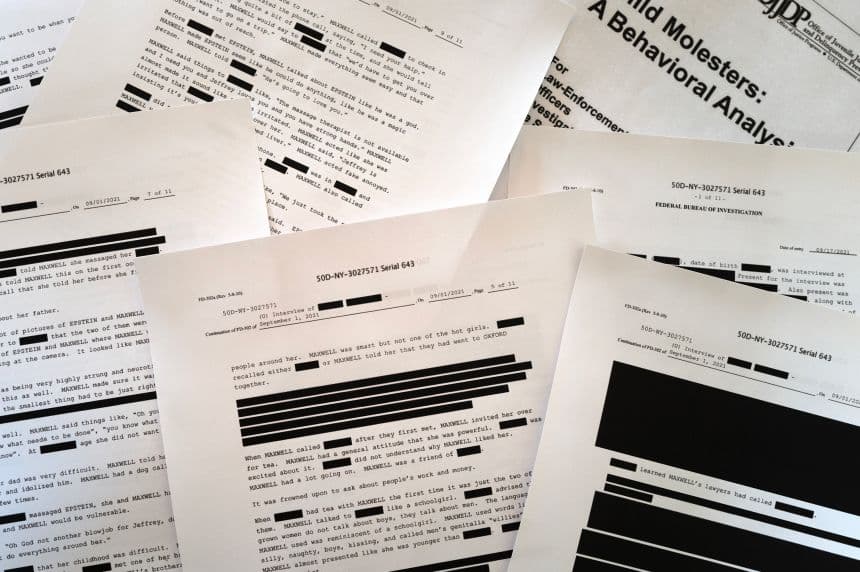
When the DOJ published its first batch of Epstein documents on December 19, 2025, journalists and researchers immediately noticed problems with the redactions. Names that should have been obscured were visible. In some cases, the redaction techniques used were so poor that hidden text could be recovered through simple digital methods — copying and pasting "blacked out" text revealed the content underneath. In other cases, a victim's name would be redacted in one document but appear unredacted in another, making the redaction effort meaningless.
The January 30, 2026 release compounded the problem. Despite warnings from victim advocates and the press about the December failures, the second batch contained many of the same errors. The Wall Street Journal's systematic review found that the vast majority of victim names — 43 of 47 identifiable individuals — appeared somewhere in the released materials without redaction. At least 31 victims' full identities were exposed, including individuals who had never publicly come forward.
This represents the single most egregious violation of victim privacy in one day in United States history. — Attorneys for 200+ Epstein survivors, February 1, 2026
How the Redaction Process Failed
The failures stemmed from multiple systemic issues in the DOJ's document review process. With nearly 6 million pages to process under a congressionally mandated timeline, the department faced an enormous logistical challenge. However, experts in document redaction noted that the errors went beyond what could be attributed to volume alone.
- Inconsistent redaction across documents — a name redacted in one file appeared in plain text in another
- Faulty digital redaction techniques that allowed text to be recovered through copy-paste or metadata extraction
- Failure to cross-reference redacted names across the full document corpus
- No apparent quality assurance review before publication
- Contextual clues left intact that allowed readers to identify redacted individuals through surrounding details
The Demand to Take Down the Files
On February 1, 2026, attorneys representing more than 200 alleged Epstein victims filed an emergency motion asking federal judges to order the DOJ to take down the document website. The motion described the release as a betrayal of the survivors who had cooperated with federal investigators under assurances that their identities would be protected. Many of these individuals had provided testimony and evidence at great personal risk, and the exposure of their identities subjected them to unwanted media attention, harassment, and psychological harm.
The incident raised broader questions about the tension between public transparency and victim protection in high-profile criminal cases. While the Epstein Files Transparency Act was designed to ensure public access to information about Epstein's crimes and the government's handling of the case, it was not intended to expose the identities of trafficking victims. The redaction failures demonstrated the difficulty of balancing these competing interests, particularly when handling millions of documents under time pressure.
Review the victim testimony and court filings that form the backbone of the Epstein case record
Read Victim Testimony DocumentsImplications for Government Transparency
The Epstein files redaction disaster has become a case study in how government transparency initiatives can go wrong when adequate safeguards are not in place. It has prompted calls for reform of federal document review procedures, including the use of AI-assisted redaction tools, mandatory quality assurance protocols, and independent review by victim advocates before publication. As the investigation continues and more documents are processed, the handling of victim privacy will remain a critical test of the government's commitment to both transparency and the protection of survivors.
The Contrast Between Victim Exposure and Co-Conspirator Protection
Perhaps the most damaging aspect of the redaction failures was the stark contrast between how victim identities and co-conspirator identities were treated. While 43 of 47 victim names were left unprotected, the names of individuals identified by the FBI as co-conspirators were carefully redacted until congressional pressure forced their disclosure weeks later. This asymmetry became a rallying point for victim advocates, who argued that the DOJ's redaction priorities revealed a systemic bias toward protecting the powerful at the expense of the vulnerable — the same dynamic that had enabled Epstein's crimes in the first place.
The redaction failures have had lasting consequences for the victims whose identities were exposed. Several have reported increased harassment, unwanted media attention, and psychological distress directly attributable to the disclosure of their names. The incident has complicated the relationship between survivors and the institutions pursuing transparency in the case, creating a tension that continues to affect how subsequent document releases are handled and negotiated.
Explore the full Epstein document archive with properly attributed public records from official government sources
Browse Epstein's InboxContinue Reading
Explore Archive Hubs
Sources & References
Frequently Asked Questions
How many victim names were left unredacted in the Epstein files?
A Wall Street Journal investigation found that 43 of 47 victim names were left unredacted in the DOJ's January 2026 Epstein file release, exposing survivors who were supposed to be protected.
Why were Epstein victim names not properly redacted?
The DOJ failed to apply consistent redaction protocols across the 3. 5 million pages released, with errors including missed names in headers, footers, and cross-references within documents.
What happened after the Epstein redaction failures were discovered?
Attorneys representing more than 200 survivors demanded the DOJ take down the document website, calling it the worst victim privacy violation in U. S. history.
Did the DOJ fix the unredacted Epstein victim names?
The redaction failures prompted an emergency review process by the DOJ, but the exposed names had already been widely downloaded and shared before corrections could be made.
Disclaimer: All information in this article is sourced from publicly available court records, government FOIA releases, and credible news reporting. This is informational content. Inclusion or mention of any individual does not imply wrongdoing. All persons are presumed innocent unless proven guilty in a court of law.