Oversight committees use closed-door depositions and public hearings for different functions, not as interchangeable stages. One is typically optimized for detail development and contradiction testing, while the other is optimized for public accountability and institutional signaling. Misreading that design can distort expectations about what will be visible and when [1][2].
TL;DR
- Closed-door sessions often produce higher-detail fact development.
- Public hearings usually maximize transparency and institutional pressure.
- Choosing one format first does not imply the other is excluded later.
- Readers should map claims to format and stage before drawing conclusions.
Different Formats, Different Objectives
Committees often start with formats that support technical questioning and record assembly before moving to public sessions that communicate findings and policy implications. This sequencing can create apparent visibility gaps, but those gaps are often procedural rather than evidence-based [1][2][3].
What Closed-Door Depositions Do Well
- Enable longer technical questioning and document-by-document review.
- Reduce performative incentives that can crowd out detail.
- Allow committees to test contradictions before public framing.
- Support iterative follow-up with supplemental productions.
What Public Hearings Do Well
- Create public accountability and clearer institutional record visibility.
- Surface key findings in accessible form for broader audiences.
- Put agency positions on-record in a high-scrutiny setting.
- Clarify policy stakes and next-step oversight priorities.
How One Format Often Feeds the Other
A common pattern is closed-door development first, then public hearing summarization. When that sequence occurs, apparent shifts in narrative may reflect disclosure stage changes rather than new underlying facts. Tracking versioned statements helps separate these effects [1][2][3].
Reader Interpretation Checklist
- Identify whether the claim comes from deposition notes or hearing transcript.
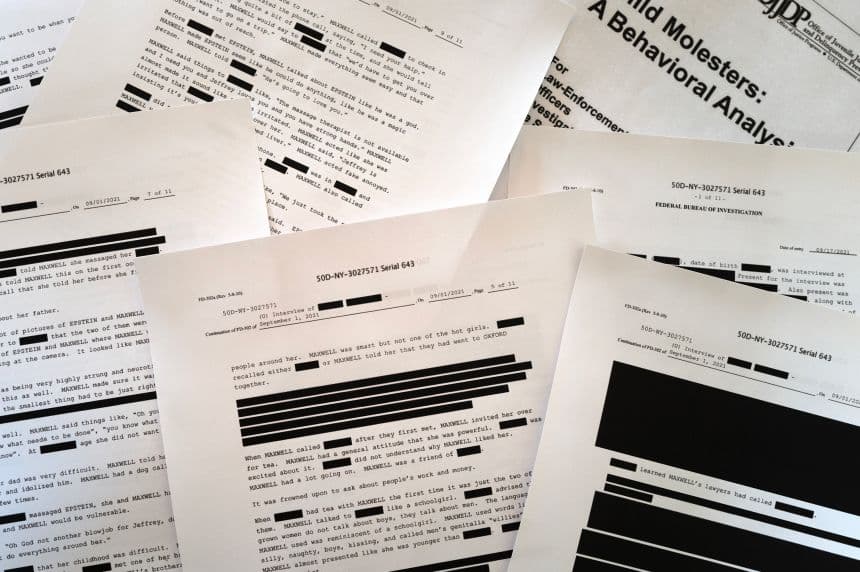
- Check whether supporting exhibits are public, partial, or withheld.
- Watch for later releases that clarify earlier closed-session references.
- Avoid treating format choice as proof of reliability or unreliability by itself.
Bottom Line
Closed-door depositions and public hearings should be evaluated as complementary oversight tools. Accuracy improves when coverage ties each claim to its procedural format and disclosure stage instead of forcing one-size-fits-all interpretations [1][2][3].
This topic is covered in depth in Epstein Congressional Oversight Explained, which consolidates the archive's explainers on it.
Read the guideContinue Reading
Explore Archive Hubs
Sources & References
Frequently Asked Questions
Are closed-door depositions less reliable than public hearings?
Not necessarily. They serve different goals and can provide deeper fact development before public presentation.
Why might key claims appear in hearings before full exhibits are public?
Committees may reference non-public deposition material while exhibit release follows separate procedural timing. The article links the point to dated records, public filings, or source-attributed reporting.
Can a committee switch formats during the same investigation?
Yes. Many investigations move between private and public formats as evidence and strategy evolve.
Disclaimer: All information in this article is sourced from publicly available court records, government FOIA releases, and credible news reporting. This is informational content. Inclusion or mention of any individual does not imply wrongdoing. All persons are presumed innocent unless proven guilty in a court of law.